
 Pay Online
What Are Illinois’ Laws for Bicycle Accident Liability?
What Are Illinois’ Laws for Bicycle Accident Liability?
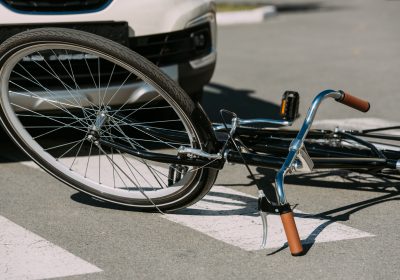
Getting hit by a car while riding your bike doesn’t just leave you shaken; it leaves you scared that somehow the blame is going to be shifted onto you. It happens more than people realize. A driver says you “came out of nowhere.” An insurance adjuster asks why you weren’t in a bike lane. Suddenly, instead of focusing on healing, you’re worrying about bills.
At SAM LAW OFFICE LLC, we have represented injury victims for years and have seen firsthand how severe bicycle accident injuries can be. These injuries can require weeks off work, physical therapy, and other challenges. Because of this, it is crucial to establish liability correctly, and that starts with understanding the law.
Here are several key Illinois laws that shape how bike accident liability is determined:
- Illinois follows shared-road laws, meaning cyclists and drivers have many of the same rights and responsibilities, though motorists must exercise heightened caution around vulnerable road users.
- There is no statewide helmet requirement for cyclists, but insurance companies may still try to argue helmet use in relation to injuries.
- The burden of proving a driver’s negligence falls on the injured cyclist.
- Illinois applies a modified comparative fault system, meaning fault can be divided between parties.
Understanding how these laws work together is critical to keep unfair blame from being placed on your shoulders.
What Are Illinois’ Shared Road Laws?
The first thing you need to understand after a bike accident is Illinois’ shared road laws. Bicyclists have the same rights and responsibilities as motor vehicle drivers. That means obeying traffic signals, yielding appropriately, and following the rules of the road. If your failure to follow these rules contributed to the accident, it can negatively impact your ability to file a successful injury claim.
Bicyclists are also generally required to ride as close as practicable to the right-hand side of the roadway. However, there are situations where a cyclist can legally take the full lane:
- To avoid road hazards or debris
- When the lane is too narrow to share safely with a vehicle
- When preparing for a left turn
- When passing another vehicle or cyclist
Motorists, for their part, are legally required to give bicyclists at least three feet of clearance when passing. Drivers who fail to do so and cause injury as a result may face serious legal consequences, including felony charges in severe cases.
Does Illinois Have Helmet Laws?
You also need to be aware of helmet laws. Illinois does not have a statewide mandatory helmet requirement for adult cyclists. Riding without a helmet is legal.
However, even though it is legal, insurance companies may still try to use helmet use as leverage in a claim, particularly if you suffered a head injury.
They may argue:
- Your injuries would have been less severe if you had been wearing a helmet.
- You contributed to the extent of your own damages.
An experienced attorney can push back against attempts to improperly reduce compensation based solely on helmet use, especially when the driver’s negligence caused the collision in the first place.
How Do I Prove the Driver That Hit Me on My Bike Was Negligent?
Once you understand the road rules and helmet laws, you need to understand how Illinois’ negligence laws work, as negligence is the foundation of your injury claim.
To recover compensation, you must prove that the driver:
- Owed you a duty of care
- Breached that duty
- Caused the accident
- Caused your injuries as a result
In bicycle cases, negligence often involves:
- Distracted driving (texting or phone use)
- Speeding
- Failing to yield
- Unsafe right turns across a cyclist’s path
- “Dooring” (opening a car door into a cyclist)
The burden of proof falls on the injured cyclist. That is why evidence matters. Police reports, photographs, witness statements, and medical records all help establish exactly what the driver did wrong.
Without clear proof of negligence, insurance companies will argue there is “no evidence” their client contributed to your injuries. Strong documentation protects your position.
Can I Still Recover Damages If I Was Partially at Fault?
Finally, you must understand Illinois’ modified comparative fault system, because even small allegations of fault can affect your recovery.
Illinois follows a 50% bar rule. This means:
- You can recover compensation if you are less than 50% at fault.
- If you are 50% or more at fault, you recover nothing.
- If you are partially at fault, your damages are reduced by your percentage of responsibility.
For example, if you are awarded $100,000 but are found to be 20% at fault, your recovery would be reduced to $80,000.
This rule is why insurance companies work so hard to shift blame onto cyclists. Even minor allegations, such as not signaling, riding slightly outside a bike lane, or not wearing bright clothing, may be used in an attempt to increase your fault percentage.
The lower your fault percentage, the stronger your financial recovery.
Know Your Rights, Protect Your Recovery
Illinois law is designed to give bicyclists meaningful protection on the road. But those protections only translate into compensation if liability is clearly established and your claim is properly pursued.
If you’ve been injured in a bicycle accident, you might be feeling unsure of your next steps. That’s why you should meet with SAM LAW OFFICE LLC. Our experienced team is here to listen to your story, provide a clear explanation of your legal options, and help you understand how to protect your rights.
Reviews
Providing Legal
Solutions In An
Equitable &
Cost-Effective Manner
Related Articles
Getting hit by a car while riding your bike doesn’t just leave you shaken; it leaves you scared that somehow the blame is going to be shifted onto you. It…

A new job offer lands in your inbox. It comes with better pay, a real career leap, maybe even a fresh start. But you share custody of your child, and…

Being cut off from a grandchild is one of the most painful experiences a grandparent can face. Whether it follows a divorce, a family dispute, the death of a parent,…
Contact Us
Get Your Free Consultation!

Attorney Advertising. This information is designed for general information only. The information presented should not be construed to be formal legal advice nor the formation of a lawyer/client relationship. Past results and testimonials are not a guarantee, warranty, or prediction of the outcome of your case, and should not be construed as such. Past results cannot guarantee future performance. Any result in a single case is not meant to create an expectation of similar results in future matters because each case involves many different factors, therefore, results will differ on a case-by-case basis. By providing contact information, users acknowledge and give explicit consent to be contacted via the methods of communication provided, including SMS. Message and data rates may apply. Message frequency may vary. Reply STOP to opt out.
NUVEW | Copyright 2026 All Rights Reserved | Accessibility Notice | Privacy Policy