
 Pay Online
Who Is Responsible If a Truck Tire Blows Out and Causes a Crash?
Who Is Responsible If a Truck Tire Blows Out and Causes a Crash?
A truck tire blowout can happen in seconds, but the damage it leaves behind can last for years. If you were injured in a crash caused by a blown truck tire, you may be wondering who you can hold accountable. After all, you cannot sue a tire. So where does that leave you?
The answer depends on what caused the blowout and who had the opportunity to prevent it. Depending on the facts of your case, liability may fall on:
- The truck driver, if he or she failed to inspect the tires, missed dangerous wear, or ignored a known problem.
- The trucking company, if poor maintenance practices, inadequate inspections, or unrealistic delivery schedules played a role.
- A maintenance company, if improper repairs, faulty installation, or a missed inspection contributed to the crash.
- The tire manufacturer, if a defective tire or manufacturing flaw led to the failure.
At SAM LAW OFFICE LLC, we’ve spent over 20 years helping truck accident victims identify the parties responsible for their injuries and pursue the compensation they’re owed. If you’re trying to determine who contributed to your accident, we’re ready to build you a strong case.
What Causes a Truck Tire to Blow Out?
Truck tire blowouts rarely happen without a reason. Common causes include:
- Underinflated or overinflated tires that experience excessive heat or stress.
- Worn-down or damaged tires that were not replaced in time.
- Overloaded trucks that put excessive pressure on tires.
- Road hazards such as potholes, debris, or uneven surfaces that damage tires on impact.
- Improper tire installation, including incorrect mounting, mismatched tires, or inadequate torque on lug nuts.
- Manufacturing defects, where a tire fails due to flawed materials or errors made during production.
In many cases, more than one of these factors plays a role. A tire that was already worn may have held up under normal conditions but failed when the truck hit a pothole or was loaded beyond its capacity. That overlap is exactly why a thorough investigation, one that looks beyond the immediate scene, is often necessary to identify every party that contributed to the crash.
Should the Truck Driver Have Known the Tire Was Unsafe?
Truck drivers are generally required to conduct pre-trip and post-trip inspections and report any safety defects they find. These inspections typically cover:
- Tire tread depth and overall condition
- Visible cuts, bulges, or sidewall damage
- Proper tire inflation and pressure levels
- Secure wheel fasteners and lug nuts
- Signs of uneven wear that may indicate alignment or load issues
If a driver ignored visible tire damage, skipped a required inspection, or continued driving despite knowing a tire was unsafe, that driver may bear some liability for the crash.
What Standards Are Trucking Companies Expected to Meet?
Federal trucking regulations require companies to inspect, repair, and maintain their vehicles so they are safe to operate. Under 49 CFR Part 396, that includes addressing tire problems before they create a safety hazard.
A trucking company may be responsible if it:
- Failed to inspect tires regularly or ignored required maintenance.
- Kept worn, damaged, or unsafe tires in service instead of repairing or replacing them.
- Ignored known tire problems reported by a driver or found during an inspection.
- Overloaded the truck, exceeding applicable weight limits. Federal rules generally cap interstate vehicles at 80,000 pounds, with separate limits for single and tandem axles, although other limits may apply depending on the vehicle and route.
- Allowed an unsafe truck to keep operating despite known maintenance concerns.
The company may also be responsible for negligence by its employees while they are performing their jobs.
Could Poor Maintenance Have Caused the Truck Tire to Blow Out?
Trucking companies often hire third-party maintenance providers to inspect and service their vehicles. This creates an additional layer of responsibility. If a maintenance company improperly installed a tire, performed a faulty repair, or failed to identify a dangerous tire condition during an inspection, that company may share liability for the crash. Understanding who performed maintenance on the truck, when it was last inspected, and what records exist can be important in determining whether a maintenance failure played a role.
What If the Tire Itself Was Defective?
Sometimes, the failure has nothing to do with the driver, the trucking company, or a maintenance provider. If the tire itself was defective, the manufacturer could be held accountable for the resulting injuries. Common tire defects that can lead to blowouts and serious crashes include:
- Tread separation: The outer layer of the tire detaches from the inner structure, often at highway speeds.
- Sidewall failures: Weak or improperly bonded sidewalls can rupture under normal road pressure.
- Bead defects: A flawed bead (the edge that seals the tire to the wheel rim) can cause the tire to lose its seal and fail suddenly.
- Belt separation: The steel belts inside the tire separate from surrounding rubber, destabilizing the tire.
- Manufacturing irregularities: Inconsistent rubber thickness or improper bonding during production can create weak points that fail under pressure.
In these situations, liability may extend beyond the trucking company to the tire manufacturer, and in some cases, the distributor or retailer who supplied the tire.
What Evidence Can Help Determine Who Is Responsible?
Knowing that a tire blew out isn’t enough on its own. Investigators need to determine why it failed and whether someone had the opportunity to prevent it. Evidence that can help establish liability includes:
- The damaged tire and its remaining components, which may reveal signs of wear, defects, or improper maintenance.
- Driver inspection reports, maintenance records, and tire replacement histories.
- Truck electronic data, dashcam footage, and witness statements that help reconstruct the crash.
- Trucking company records and repair invoices that may reveal whether known problems went unaddressed.
Physical evidence like the tire itself can be lost, discarded, or altered quickly after a crash. Preserving that evidence early gives your attorney the best chance to identify every party who caused your truck accident.
Find Out Who Needs to Pay
Truck tire blowouts are rarely the result of a single failure. More often, they stem from a chain of decisions made by a driver, a trucking company, a maintenance provider, or a manufacturer. Identifying everyone who played a role in your accident can directly affect how much compensation you can recover for medical expenses, lost income, pain and suffering, and other damages.
If you were injured in a crash caused by a truck tire blowout, talk to an experienced attorney at SAM LAW OFFICE LLC. We’ll investigate the tire failure, preserve the evidence that matters, and identify every party who may be responsible for what happened to you.
Reviews
Providing Legal
Solutions In An
Equitable &
Cost-Effective Manner
Related Articles
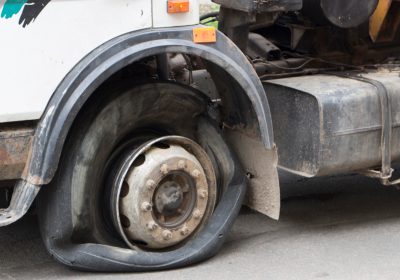
A truck tire blowout can happen in seconds, but the damage it leaves behind can last for years. If you were injured in a crash caused by a blown truck…

Being a grandparent often means enjoying the little things: having your grandkids over for the day, spoiling them a little, making memories, and then sending them home to their parents.…

No one expects to get hurt in the place they call home. And when you visit a friend who rents an apartment, you probably aren't thinking about whether the stairs…
Contact Us
Get Your Free Consultation!

Attorney Advertising. This information is designed for general information only. The information presented should not be construed to be formal legal advice nor the formation of a lawyer/client relationship. Past results and testimonials are not a guarantee, warranty, or prediction of the outcome of your case, and should not be construed as such. Past results cannot guarantee future performance. Any result in a single case is not meant to create an expectation of similar results in future matters because each case involves many different factors, therefore, results will differ on a case-by-case basis. By providing contact information, users acknowledge and give explicit consent to be contacted via the methods of communication provided, including SMS. Message and data rates may apply. Message frequency may vary. Reply STOP to opt out.
NUVEW | Copyright 2026 All Rights Reserved | Accessibility Notice | Privacy Policy